Artificial intelligence and IT in the transformation of the oil and gas sector

Artificial intelligence and IT in the transformation of the oil and gas sector

June 2nd, 2023

The oil and gas (O&G) sector continues to be one of the most important in the national economy. Oil's share of industrial GDP corresponds to 15% of the total, with a growing trend until 2030. In 2022, the country set an all-time production record: just over 3 million barrels per day (bbl/d), an increase of 2.47% compared to 2020. In natural gas, there was an increase of 2.98% over the same year, with 130 million cubic meters.

The country is the ninth largest oil producer, accounting for 3% of the volume generated on the planet, according to the National Petroleum Agency (ANP). The United States leads the ranking: 16.5 million in 2021, 18% of the total. The Energy Research Company's (EPE) estimate, described in the Ten-Year Energy Expansion Plan 2031, is that oil and gas extraction in Brazil will grow by just over 80% in six years, reaching 5.2 million barrels per day in 2029.

US$ 24 billion/year is the companies' investment estimate for increasing oil and natural gas production in Brazil.

This context highlights the importance of this industry for the world and Brazilian economies - which also indicates that the energy transition in these countries is still a medium and long-term plan, given the sector's dependence on it.

So, while it is becoming urgent for oil companies to align themselves with the climate agenda, especially on the issue of carbon emissions, it is equally important for economic balance and global energy availability to improve production performance, reduce operating costs and mitigate the environmental impact of the entire O&G chain.


Technologies to transform the sector

In this process, O&G companies can look to digitalization as the best shortcut for modernizing their operations, increasing productivity and safety at all levels of the chain and generating more sustainable growth paths.

IoT ecosystems, for example, have been used to collect real-time data on the entire production and distribution infrastructure - from marine extraction platforms and refineries to extensive pipeline networks and logistics systems. The aim is to improve operational efficiency by cutting unnecessary related costs, raising productivity, reducing energy consumption and ultimately boosting companies' profitability.

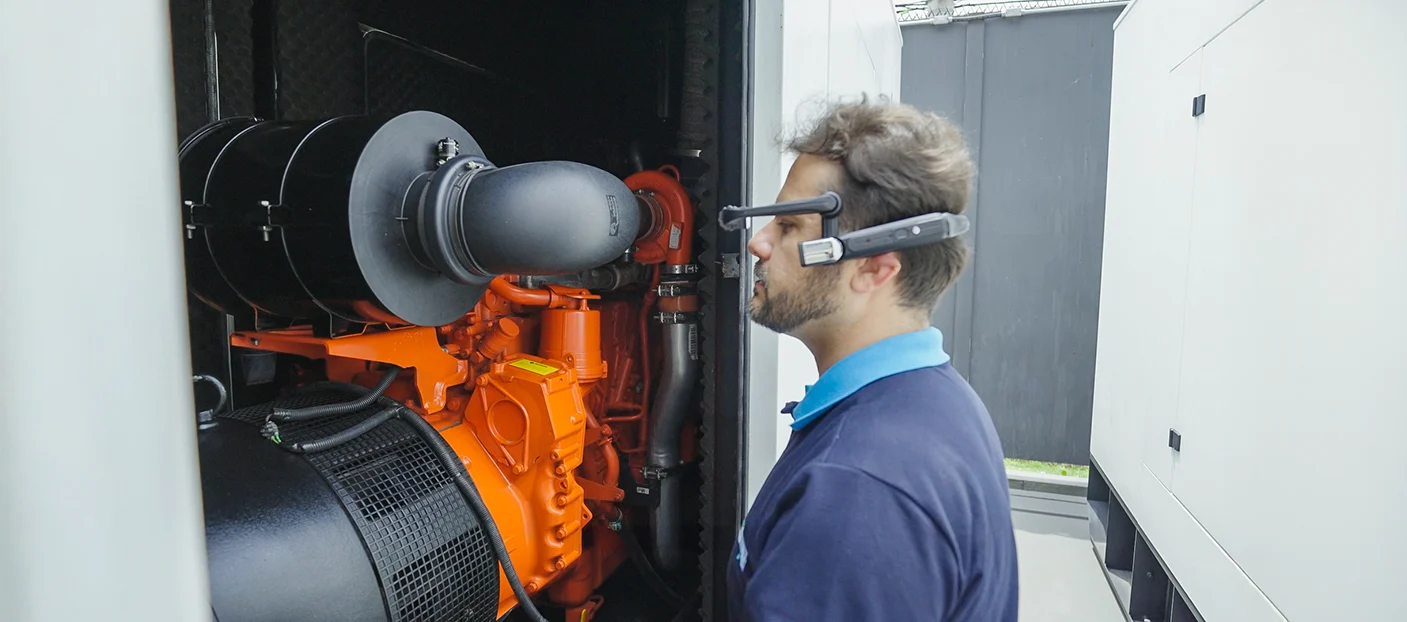
Edge computing has helped speed up data processing in remote areas with restricted connectivity. The use of drones and augmented reality glasses is becoming increasingly common in the inspection of offshore platforms and production structures, where the high risk of safety makes the use of these resources essential.

READ MORE: The digital transformation of the oil and gas industry

More recently, artificial intelligence (AI) has played a key role in transforming the sector. The relevance of this tool has been increasingly perceived in the sector. According to a survey by Ernest & Young (EY), 921% of O&G companies around the world are investing or intend to invest in AI within five years. And 50% of the executives interviewed in the study are already using this technology to solve challenges in their organizations.


AI cases in the sector

According to a report by the Al-Attyiah Foundation, a Qatari organization that monitors the global energy industry, there has been an increase in the number of cases of large oil companies that have adopted AI to solve problems in recent years - and are saving millions of dollars as a result.

In 2021, the Malaysian company PETRONAS implemented the AVEVA Predictive Analytics program to detect failure risks in its production infrastructure. More than 200 models were applied in the first year, resulting in 51 early equipment failure alerts. The process delivered a preserved value of US$ 17.4 million in the anticipation of problems - 14 times more than invested with the solution.

Two years ago, the Wadia Institute of Himalayan Geology (WIHG) discovered a new AI-based technique for analyzing seismic waves in order to identify the presence of hydrocarbons - such as oil and natural gas - below the surface, increasing the efficiency of the process of discovering new reservoirs for exploration.


Perceived value

For McKinsey consultants, one of the main challenges for the digital acceleration of the O&G sector is the difficulty in making the investments made in innovative and intelligent technologies tangible. The difficulty is not technical, but one of vision and culture.

For many executives, because some of the problems detected by AI models are not necessarily sensitive to the core business, they end up postponing more forceful action in this direction. Or because the AI project teams are unable to demonstrate the final impact of their efforts.

However, in the most successful strategies, the financial benefits are clear and measurable. According to McKinsey, attentive companies have captured an additional US$ 5 per barrel of oil equivalent through the use of AI-driven solutions, both in the drilling/extraction phase and in inventory management and predictive maintenance.

Petrochemical plants use these models to predict the best operating conditions in real time, optimizing production. As a result, profit margins have been reported to increase by between ten and twenty cents per barrel. At this rate, the application of advanced analytical approaches can generate up to US$ 300 million in additional value for the company in just 18 months.

For the digital strategy to have its perceived value, as described above, it is essential to create a system for tracking actions.


Benefits of artificial intelligence in the sector

As we have seen, this technology plays an important role in optimizing the exploration and drilling of wells, as well as helping to streamline production and logistics, inventory management and scenario predictability, among other things.

In this sense, we can mention:

- Energy and supply forecast
AI models and data analysis can predict adverse weather conditions that could impact production, determining the best combination of energy sources - fossil, biofuel or renewable - to avoid shortages;

- Demand forecasting
Analysis of the historical demand curve and any changes in the socio-economic scenario of regions or countries help generate valuable insights for more effective stock management and the pace of production;

- Fault anticipation
Intelligent models applied to systems and components used on extraction platforms, for example, monitor operational integrity and anticipate problems that could lead to a halt in activities, while also helping to reduce operating costs with post-failure maintenance;

- Demand management
By analyzing data collected on the consumption patterns of companies and cities, it is possible to customize the product offer and manage its distribution, without excess or waste.

- Stock optimization
AI systems enable effective management of the relationship between production and storage, guaranteeing efficient supply without losses.

- Pricing
Models that assess the volatility of the energy markets based on historical data and trends help to improve the commercial strategies - and increase profits - of companies;

In addition, artificial intelligence is absolutely essential for the development of the machine learning structures that will be used in the digitalization of the O&G sector.


Environmental focus

Digital methods are proving to be among the most powerful and cost-effective ways of reducing industry's carbon footprint too. Yield, energy and production (YET) optimization techniques in production and refining operations help companies maximize their output for every unit of energy they consume. This increases profitability and reduces carbon emissions. In parallel with increasing performance while reducing costs, the process of digitizing O&G is essential for aligning the sector with the demands of the global climate agenda.

There is a great deal of pressure worldwide on oil companies to mitigate the impact of their activities on nature, seeking to reduce the risk of leaks, the loss of volumes from operations and a more efficient use of energy and natural resources.

In a report released in May of this year, the International Energy Agency (IEA) points out the sector's need to halve its emissions intensity by 2030.

In “Net Zero Emissions by 2050 Scenario”, the researchers state that the operations of this industry account for 15% of annual global greenhouse gas (GHG) emissions related to the energy sector. Measures such as greater control over methane expelled in the process, electrification of production systems with clean energy, increased levels of carbon capture, use and storage, and the adoption of green hydrogen in the refining stage - combined with reduced consumption of oil and natural gas - could result in a 60% reduction in emissions from the sector by the end of the decade.

The good news, according to the IEA, is that there are already technologies available and affordable for companies to undertake a real, sustainable transformation of their operations. The applications of AI are limitless and go beyond making processes better or faster, creating a new business horizon in the landscape of this sector transformation.


IT in the background

This new impetus for change brought about by new disruptive technologies will only be possible, however, if there are similar investments in data processing infrastructure.

The digitization of operations generates an immense volume of data, making it necessary to use algorithms developed to solve complex problems in order to analyze the big data with greater agility and precision.

The maximum performance of AI systems can only be achieved with the support of a complete, multi-layered IT, including machine learning, programming languages, cloud, data processing tools and robust, modern and energy-efficient data centers.

This entire technological framework also needs to have a low carbon impact. Once all the agendas are aligned and the high availability of the data center is guaranteed, AI proves to be an invaluable strategic tool for creating a more favorable context for the planet's energy transition.

The consolidation of a more sustainable future for the O&G sector requires intelligence and the ability to carry it out at the speed needed for change to have a positive effect in time. And disruptive technologies - as well as efficient and reliable IT - are central to this process.

Insights

Data Center Technology Maturity Journey: from Reactivity to Zero-Outage

READ

Data center management: get to know DCIM

DCIM: what it is and how it revolutionizes data center management

READ

Data center maintenance: how to reduce risks and increase availability

READ

Privacy Overview

This website uses cookies so that we can provide you with the best user experience possible. Cookie information is stored in your browser and performs functions such as recognising you when you return to our website and helping our team to understand which sections of the website you find most interesting and useful.

Strictly Necessary Cookies

Strictly Necessary Cookie should be enabled at all times so that we can save your preferences for cookie settings.

Analytics

This website uses Google Analytics to collect anonymous information such as the number of visitors to the site, and the most popular pages.

Keeping this cookie enabled helps us to improve our website.

Marketing

This website uses the following additional cookies:

(List the cookies that you are using on the website here.)