DCIM: what it is and how it revolutionizes data center management
Understand what DCIM is and how this solution integrates IT and infrastructure, optimizing data center management with visibility, efficiency and sustainability.
August 6th, 2025
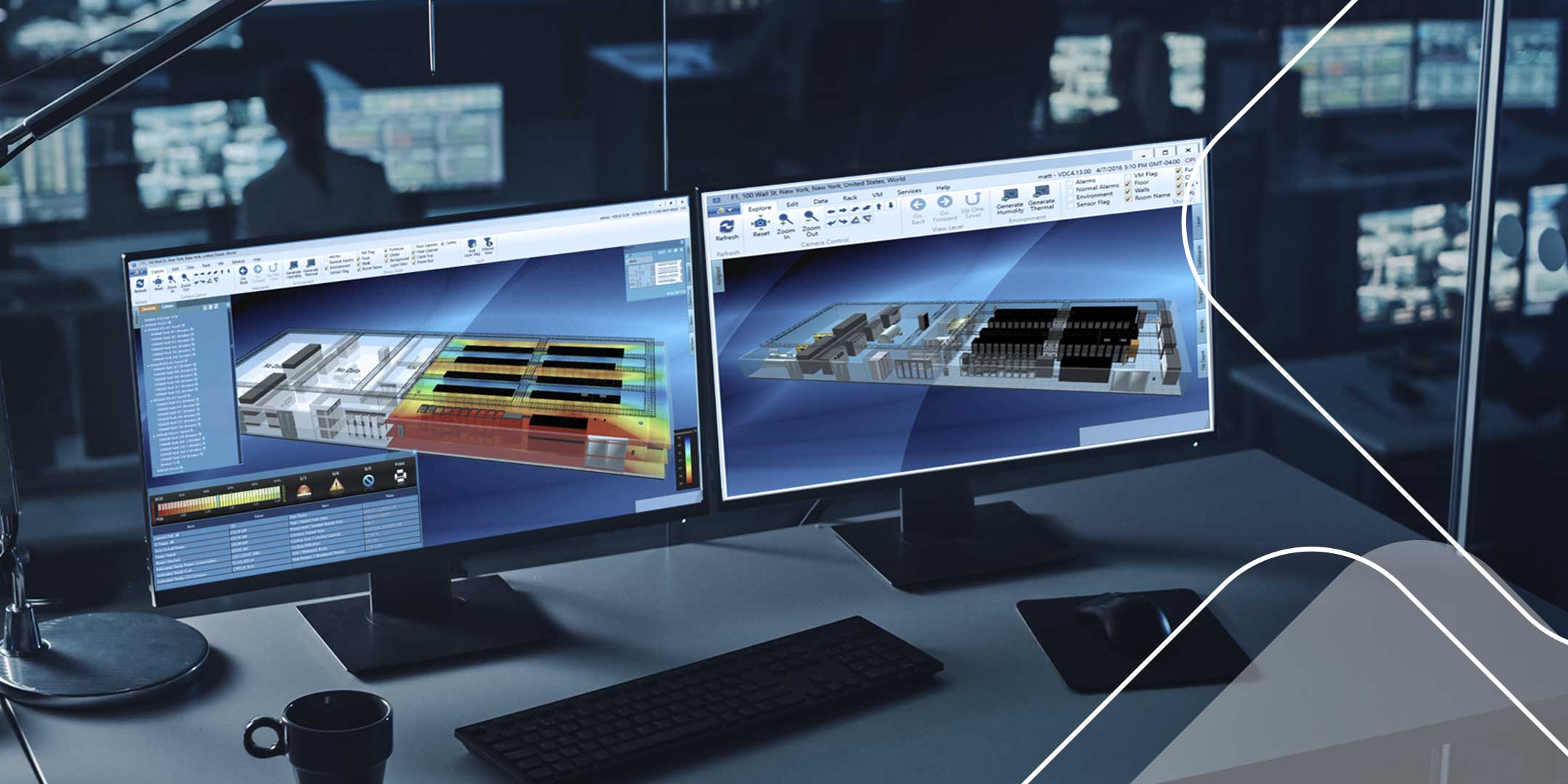
DCIM (Data Center Infrastructure Management) is the key to optimizing the operation and efficiency of modern data centers. By centralizing critical infrastructure and information technology data on a single platform, DCIM improves operational performance, reduces risks and speeds up decision-making.
It allows technical teams to visualize, analyze and control all assets and subsystems in an integrated way - from the energy consumption of circuits to the temperature of specific racks - all in real time.
More than just a monitoring system,
DCIM acts as a operational intelligence hub
hub.
In highly critical environments, where minutes of downtime represent significant losses, DCIM delivers total visibility, automation and a reliable database for preventive and corrective actions.
What is DCIM?
DCIM is a platform that unifies information from the entire critical infrastructure - from energy and climate control to technology assets - providing a holistic view of the data center. It connects sensors, monitoring systems, physical and logical assets, consolidating everything
into a unified control interface.
This centralization
allows:
Reduced
time spent
verifying
information;
Agile identification
the root cause
of failures;
Increased
performance
of operational
operational;
Significant
significant
in
response
to incidents;
Measuring
efficiency
efficiency
of the infrastructure;
Greater control
over the
framework that
supports
IT operations.
Benefits of DCIM in data center management
DCIM helps managers and operators keep track of all areas of the data center more easily and accurately. With it, you can make faster, more reliable decisions, reduce waste and prevent failures before they become critical problems.
01
Real-time visibility
With DCIM, managers have a clear and instantaneous view of everything that is happening in the data center's physical and logical environment.
Continuous monitoring of variables such as temperature, humidity and electricity consumption;
IoT sensors detect potential faults before they affect services;
Centralized data visualization reduces fragmentation between IT and infrastructure areas.
02
Operational efficiency
The system identifies where the waste is and how to optimize the use of resources.
Automatic calculation of indicators such as PUE (Power Usage Effectiveness);
Identification of energy waste and idle capacity;
Support for expansion planning and optimizing the use of existing resources.
03
Predictive and preventive maintenance
With DCIM, maintenance ceases to be an emergency response and becomes part of the operational continuity strategy. By integrating real-time, historical and sensor data, the system makes it possible to anticipate failures, plan interventions based on real risk and guarantee longer asset life.
Anticipating faults before they impact on operations (predictive maintenance);
Technical planning based on real conditions and not just periodicity (preventive maintenance);
Reduction in high-cost emergency and corrective maintenance;
Greater availability and longevity of critical equipment.
04
Reducing operational risks
With automatic alerts and historical data, DCIM helps to predict and prevent problems.
Intelligent alerts and event logs anticipate failures;
Real-time dashboards facilitate decision-making in critical situations;
Predictive and preventive maintenance support.
05
Sustainability and ESG compliance
DCIM contributes directly to environmental and governance goals.
Detailed monitoring of energy consumption;
Support for compliance with environmental targets and regulatory standards (e.g. ISO 50001);
Reduced carbon footprint and electricity costs.
06
Rapid response to incidents and integration between areas
Less time investigating faults, more time solving what really matters.
Elimination of silos between IT and infrastructure teams;
Correlation of events (e.g. temperature rise linked to the load on a rack);
Facilitated collaboration between different operational teams.
How DCIM improves data center management
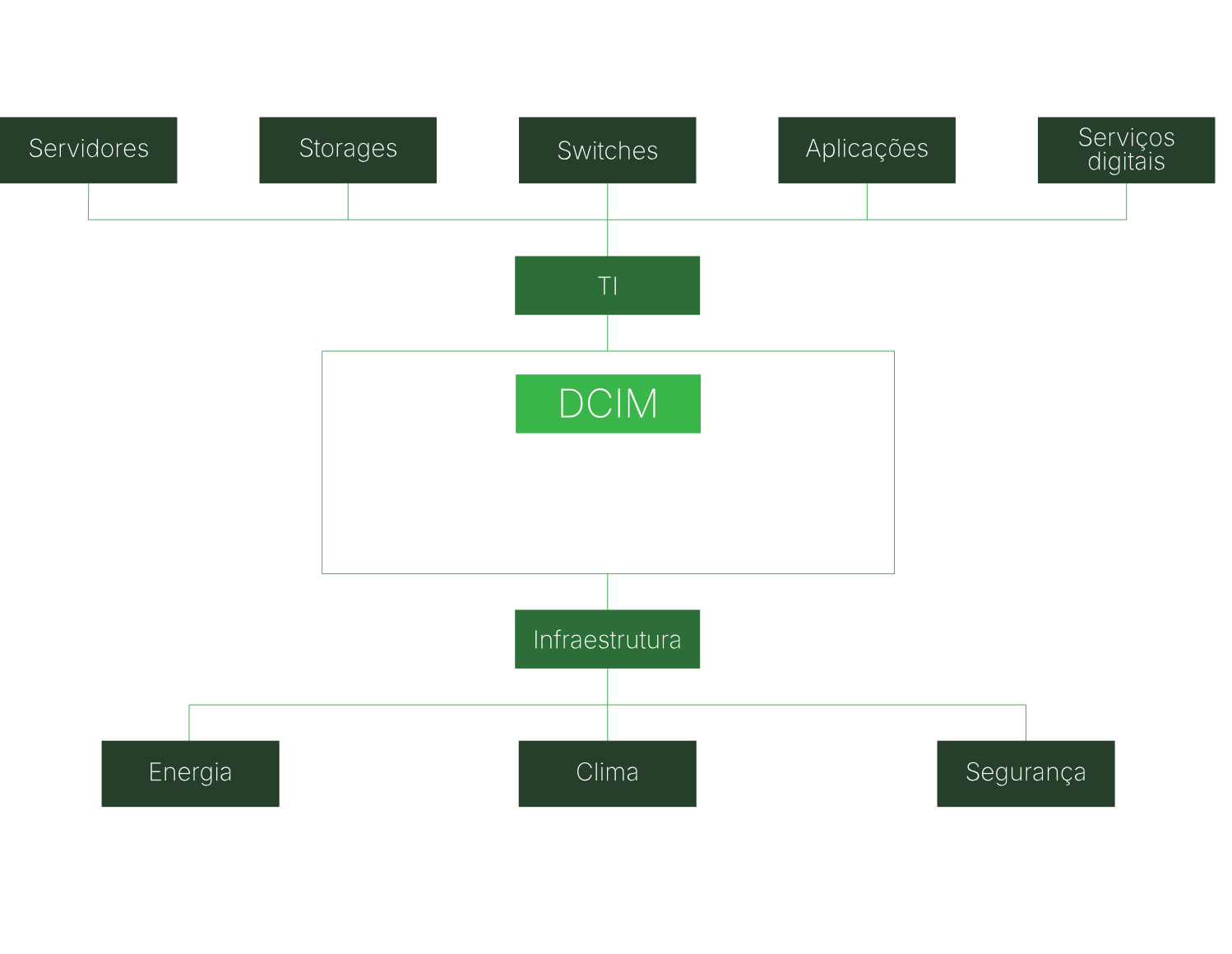
In a modern data center, operation depends on harmony between two main pillars:
servers, storages, switches, applications and digital services.
Although they share the same physical space, these domains often operate in isolation, making systemic
difficult to make systemic diagnoses and respond quickly. DCIM solves this
mismatch by consolidating data from both worlds in a unified interface.
The DCIM acts as a central hub, connecting the two and enabling the exchange of information and
and unified control in real time.
From this integrated vision, it is possible:
Intelligently correlate events (e.g. electrical overload associated with cooling failure);
Detect bottlenecks and points of failure before they cause interruptions;
Optimize the use of space, energy and cooling based on historical data;
Reduce the mean time to repair (MTTR) and increase the availability of the environment.
Comparison: Traditional Management vs. Management with DCIM
Aspect
Traditional management
Management with DCIM
Visibility of systems
Fragmented between areas
Centralize in real time
Incident response
Slow and reactive
Agile and based on intelligent alerts
Monitoring
Manual or limited
Automated and continuous
Data analysis
Poorly integrated, no reliable track record
Based on historical and predictive data
Energy efficiency
Difficult to measure
Metrics such as PUE monitored in real time
Governance and compliance
Requires manual effort and control
Automated facilities
Why choose DCIM: governance and strategic decision-making
For managers responsible for mission-critical environments - such as the data centers of financial institutions, telecommunications operators, public bodies or hospitals - DCIM represents a strategic evolution in infrastructure governance. It provides a solid basis for data and analysis, transforming critical infrastructure management into an area with more predictability, control and alignment with business objectives.
Reduction of operational risks: greater control and predictability over the continuity of services;
Transparency and reports: easy access to dashboards and KPIs that help monitor targets and compliance;
Agile decision-making: analytical reports and automatic alerts enable quick and informed reactions;
Financial efficiency: optimizing operational and energy resources reduces direct costs and avoids unnecessary investments;
Strategic alignment: allows the infrastructure area to contribute concrete indicators to the corporate goals of efficiency, sustainability and availability;
Simulations and planning: the possibility of carrying out “what-if” analyses and planning expansions based on real and historical data.
DCIM in distributed environments and practical applications
One of DCIM's great differentiators is its ability to scale and operate efficiently in multi-site environments. Companies that operate more than one data center - or edge computing units such as stores, factories, agencies or branches - can consolidate the management of their entire critical infrastructure on a single platform.
Practical applications include:
Centralized monitoring of multiple sites: allows a NOC team to monitor
the status of all environments remotely with standardization and real-time alerts;
Standardization of processes and compliance: facilitates the adoption of good governance practices, even in remote locations with limited technical resources;
Edge infrastructure management: in edge computing solutions, DCIM ensures that micro data centers operate with the same reliability as large structures, reducing the risk of local
of local interruption;
Unified audits and reports: consolidating data and events makes it easier to manage SLAs,
internal and external audits and corporate expansion or modernization strategies.
This makes DCIM essential not only for centralized data centers, but also for hybrid and decentralized architectures.
hybrid and decentralized architectures.
What questions DCIM helps you answer
DCIM (Data Center Infrastructure Management) helps technology managers answer a series of strategic and operational questions that are fundamental to guaranteeing the continuity, efficiency and evolution of the IT infrastructure.
Below are the main ones:
Capacity and Planning
How much capacity is still available?
Where can I install new equipment?
What is the impact of expansions or migrations?
Are we using resources efficiently?
Efficiency Operational and Cost
How much does it cost to maintain the current environment?
Where is there wasted energy or idle capacity?
Which assets are underused or obsolete?
What is the current PUE?
Reliability and Continuity
Are we at risk of power, cooling or network failure?
Are alarms and alerts being dealt with urgently?
Do we respect SLAs and security policies?
What are the single points of failure?
Governance and Compliance
Do we comply with ISO standards or regulations?
Do we have auditable and historical records?
Is it easy to generate reports for audits?
Taking Strategic decision
How to justify investments based on real data?
Modernizing or expanding infrastructure?
Are we prepared for new demands?
Strategic Decision Making
These answers help transform data center management from a reactive activity to a proactive and strategic one, with visibility, control and a basis for informed decisions.
proactive and strategic, with visibility, control and a basis for informed decisions.
Why invest in DCIM
More than visibility - real-time decision-making power
In a scenario where every second of availability counts, DCIM isn't just a tool: it's the strategic brain of your data center. By integrating facilities and IT data into a single intelligent platform, DCIM puts total control of your critical infrastructure in the palm of your hand - wherever and whenever you need it.
With it, you gain more than efficiency: you anticipate failures, reduce risks, make quick decisions in line with business goals. And most importantly, you turn data into action, and action into competitive advantage.
In a digital world where continuity and performance define success, DCIM is the difference between reacting to the problem or mastering it before it happens.
Do you want total visibility, reliability and a truly sustainable operation?
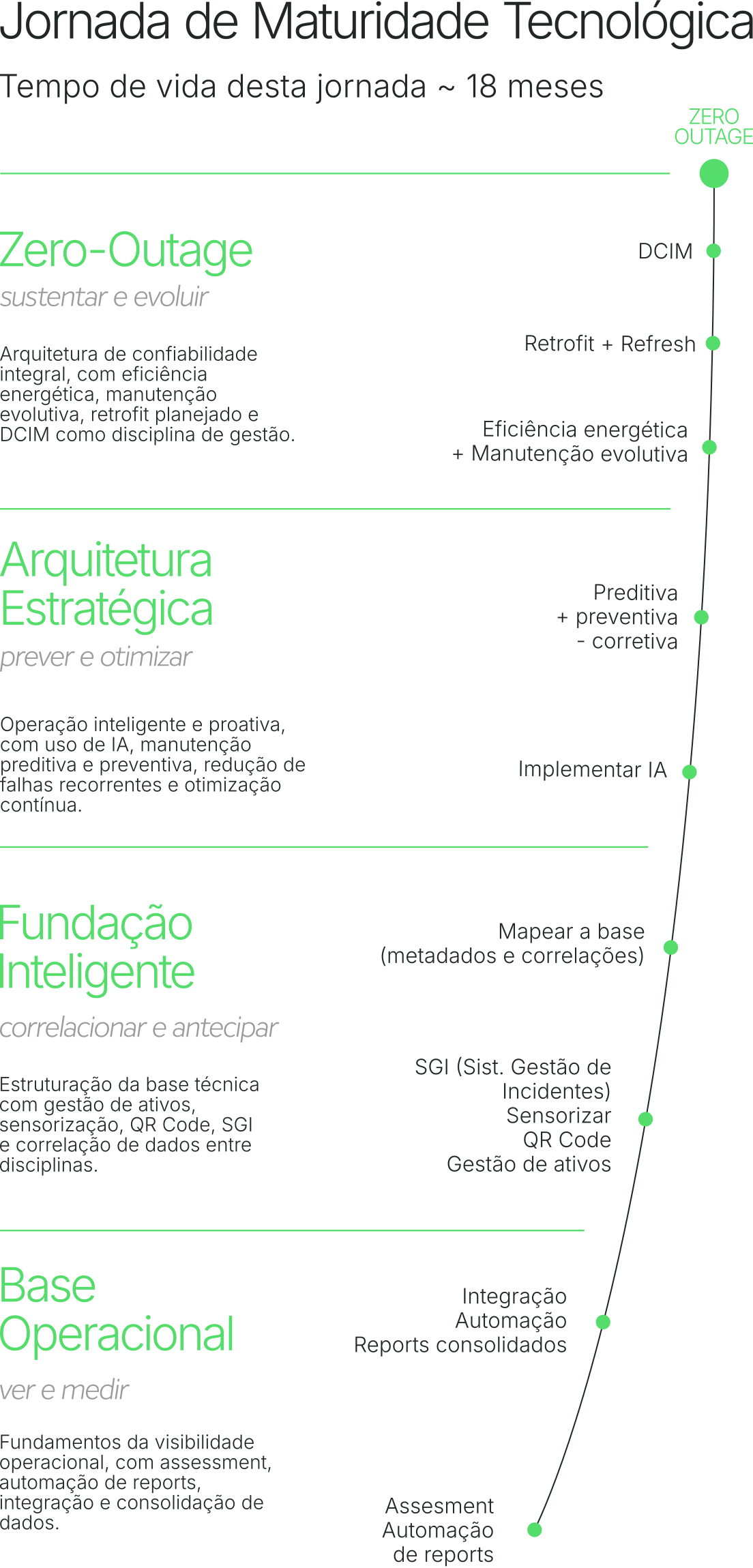
This level of performance is not achieved one-off - it is the result of a journey of technological evolution and operational maturity.
The following graph represents this trajectory within the data center, structured in stages that reflect the degree of development of the infrastructure. The progression, from bottom to top, shows how the operation advances from a reactive and fragmented model to an integrated, intelligent and strategically managed environment.
On this path, DCIM plays a decisive role: it marks the transition between intermediate and higher levels of maturity, enabling real-time visibility, automation and centralized governance. The graphic helps you visualize this process and understand where your operation stands today - and what the next step might be.
-
+Incidents | +Calls
MATURITY
+Availability | +Reliability
+
Journey life ~ 18 months
Physical layer
Weather
Electrical
Infrastructure
Security
Automation
Talk to a green4T expert and find out how to take your data center to this level of excellence.