


Estime payback, retorno anual sobre o investimento e o potencial econômico da integração entre DCIM e Rack PDU Inteligente a partir das características do seu data center.
Tempo de vida desta jornada ~18 meses Duración de esta jornada ~18 meses Journey duration ~18 months
Base
Operacional
Base
Operativa
Operational
Base
ver e medir ver y medir see and measure
Fundação
Inteligente
Fundación
Inteligente
Intelligent
Foundation
correlacionar e antecipar
correlacionar e identificar
de forma temprana
correlate and anticipate
Arquitetura
Estratégica
Arquitectura
Estratégica
Strategic
Architecture
prever e otimizar predecir y optimizar predict and optimize
Zero-Outage Zero-Outage Zero-Outage
sustentar e evoluir sostener y evolucionar sustain and evolve

Integre e monitore dados de infraestrutura física em tempo real para sustentar decisões técnicas, mitigar riscos e elevar a maturidade do seu data center.

Elimine a tomada de decisões baseada em médias ou planilhas de consumo. Conecte dados elétricos em tempo real para expandir a governança do seu data center.

Integre o DCIM ao serviço contínuo de manutenção para conectar processos, NOC e equipes de campo, transformando dados em maturidade operacional.

Integre e monitore dados de infraestrutura física em tempo real para sustentar decisões técnicas, mitigar riscos e elevar a maturidade do seu data center.
Elimine a tomada de decisões baseada em médias ou planilhas de consumo. Conecte dados elétricos em tempo real para expandir a governança do seu data center.
Integre o DCIM ao serviço contínuo de manutenção para conectar processos, NOC e equipes de campo, transformando dados em maturidade operacional.
ampliar a visibilidade sobre consumo, capacidade, risco e expansão em ambientes de missão crítica.
Transforme dados integrados da infraestrutura crítica em decisões mais seguras, com visibilidade, governança e previsibilidade para a operação.

Manutenção integrada e monitoramento contínuo para garantir disponibilidade, resiliência e evolução da infraestrutura crítica.
Sua ferramenta pode continuar cumprindo muito bem o papel de monitoramento. A diferença é que o DCIM organiza o contexto ao redor do alerta: mostra onde o problema está, quais ativos dependem daquele recurso e quanto ainda existe de espaço, energia e refrigeração. Assim, em vez de substituir o investimento já feito, ele amplia a capacidade de análise e planejamento da equipe.
A diferença está no objetivo das ferramentas.
O monitoramento normalmente responde: “Existe algum problema ou alteração acontecendo?”
O DCIM agrega uma camada de gestão, contexto e capacidade da infraestrutura, permitindo responder: “Onde está o problema? Qual infraestrutura está relacionada? Qual é o impacto? Qual capacidade ainda temos? Podemos instalar novos equipamentos? Como está a distribuição de energia, espaço e refrigeração?”
Por exemplo, o Zabbix pode indicar que uma PDU está operando próxima do limite. O DCIM pode relacionar essa PDU aos racks e equipamentos conectados, apresentar a capacidade utilizada e disponível e apoiar uma decisão de expansão ou redistribuição.
O DCIM não precisa substituir o Zabbix ou qualquer outra ferramenta, ele pode complementar e aproveitar o investimento já realizado, seja financeiro ou intelectual.
Se a planilha atende bem hoje, não há motivo para descartá-la apenas por ser uma ferramenta manual.
A pergunta é: quanto de esforço é necessário para mantê-lo atualizado e quão confiável ela continua sendo quando o ambiente cresce ou sofre alterações, ou até mesmo em uma gestão compartilhada.
O Excel normalmente registra informações de forma estática. Um DCIM pode transformar essas informações em uma representação dinâmica da infraestrutura.
Em vez de saber apenas “tenho 10 U livres neste rack”, podemos saber que existem 10 U livres, qual é a capacidade elétrica disponível, qual é a utilização da PDU, qual é a capacidade térmica disponível e quais recursos estão disponíveis para uma nova instalação.
O valor não está simplesmente em substituir uma planilha, está em transformar um controle manual em uma gestão integrada e confiável de capacidade.
O ganho aparece quando informações que hoje estão separadas passam a formar uma visão única e confiável da infraestrutura.
Ter monitoramento, planilhas, inventário e documentação não significa necessariamente ter uma visão consolidada e atualizada do ambiente.
O DCIM permite relacionar equipamentos, racks, energia, PDUs, UPS, capacidade, refrigeração, localização e demais elementos da infraestrutura, permitindo que a empresa passe de uma postura reativa, baseada principalmente em alertas, para uma gestão mais preventiva e orientada à capacidade.
O valor está principalmente em responder perguntas que normalmente exigem consultar várias fontes ou depender do conhecimento de determinadas pessoas da equipe.
A justificativa financeira não precisa se limitar à economia com ferramentas. Ela deve mostrar onde a operação perde tempo, capacidade ou segurança no modelo atual.
O ROI pode estar relacionado à redução do trabalho manual, redução de erros de inventário, melhor utilização de espaço e energia, redução do tempo necessário para implantações, redução de riscos operacionais, melhor planejamento de expansão e maior eficiência das equipes.
Para construir essa conta, vale mapear como cada processo funciona hoje, quanto tempo a equipe dedica a controles manuais, quais erros são recorrentes e qual seria o impacto de uma indisponibilidade ou de uma expansão mal planejada.
A partir dessas informações, é possível construir uma justificativa baseada no cenário real do cliente, comparando o custo atual com o potencial ganho proporcionado pelo DCIM.
Ferramentas como Zabbix, Cacti, PRTG ou Grafana podem realizar muito bem o monitoramento.
Planilhas podem atender ao controle de espaço.
CMDBs podem controlar determinados aspectos de inventário.
Sistemas internos podem controlar processos específicos.
O DCIM agrega valor quando existe a necessidade de relacionar essas informações e gerenciar a infraestrutura de forma integrada.
O objetivo não é simplesmente fazer mais monitoramento, mas fornecer contexto, relacionamento, capacidade, localização e visão operacional da infraestrutura.
O Excel pode resolver bem alguns controles, principalmente em ambientes menores ou com poucas mudanças. A limitação aparece quando a atualização passa a depender de várias pessoas, versões e conferências manuais.
A questão é avaliar o custo e o risco associados à manutenção desse processo.
É necessário considerar quem atualiza as informações, com que frequência, como são controladas as alterações, como diferentes equipes acessam os dados e qual é o impacto de uma informação desatualizada.
Conforme o ambiente cresce, o volume e a complexidade das informações aumentam. O DCIM pode automatizar processos, centralizar informações, relacionar ativos e capacidades e reduzir a dependência de controles manuais.
Não. Em muitos projetos, o Zabbix ou qualquer ferramenta de monitoramento já existente permanece responsável pelo monitoramento, enquanto o DCIM acrescenta a visão física, a capacidade e os relacionamentos da infraestrutura.
Em muitos cenários, o Zabbix ou qualquer outra ferramenta pode continuar sendo utilizado como ferramenta de monitoramento.
O DCIM pode consumir essas informações e adicionar contexto relacionado à infraestrutura física, ativos, localização, capacidade e relacionamentos.
A arquitetura ideal depende das necessidades do cliente e das capacidades de integração da solução DCIM.
Sim, desde que isso seja validado no projeto. É preciso confirmar quais integrações, APIs e protocolos estão disponíveis e quais dados podem ser importados ou sincronizados.
O cliente ou fornecedor da solução do cliente deve demonstrar quais integrações estão disponíveis, quais protocolos e APIs são suportados, quais dados podem ser exportados/importados e quais processos podem ser automatizados.
Também é importante entender se a integração é nativa ou depende de desenvolvimento adicional.
O objetivo deve ser aproveitar o máximo possível das informações existentes e reduzir o trabalho de implantação e manutenção.
A CMDB organiza itens de configuração e seus relacionamentos com serviços de TI.
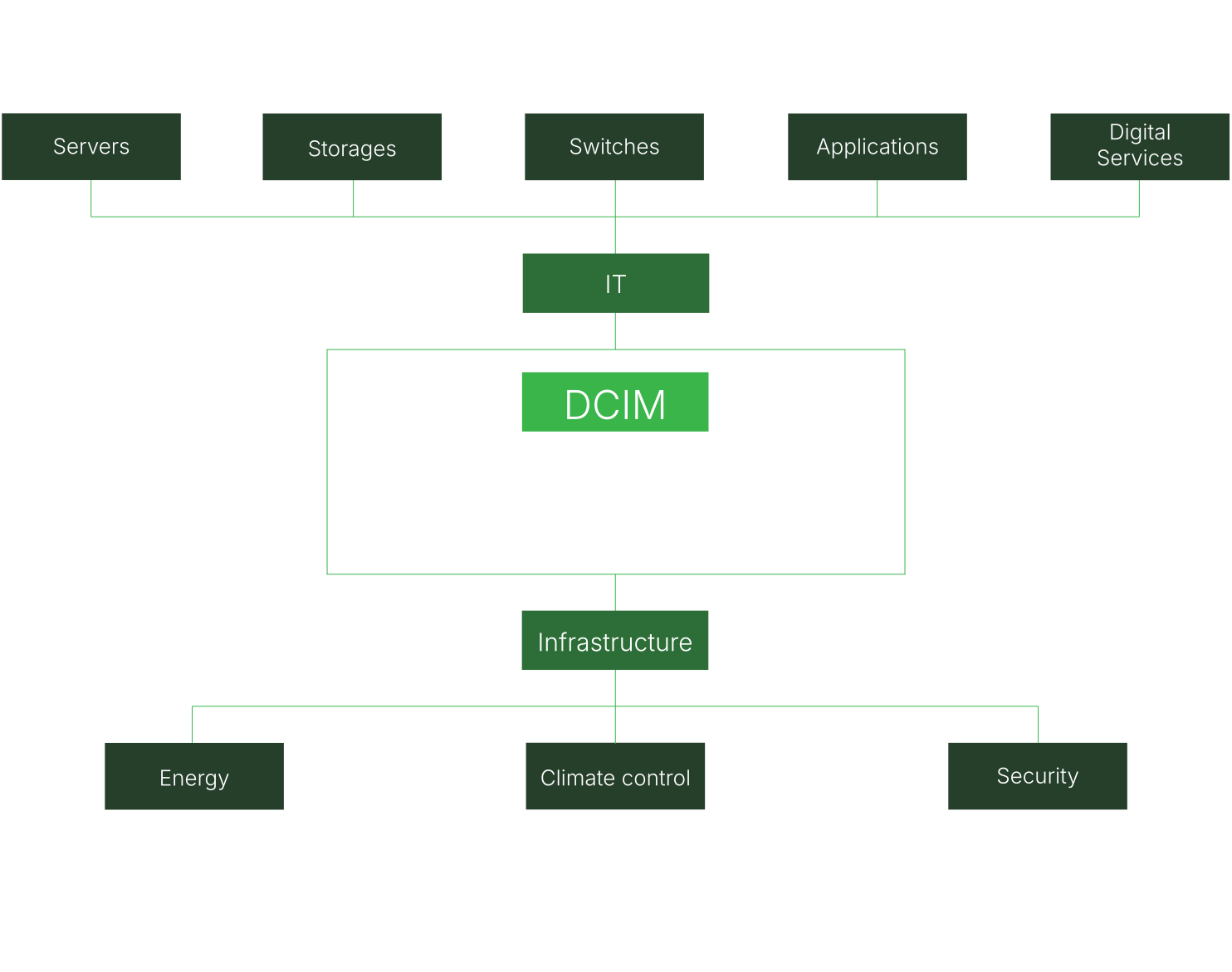
O DCIM aprofunda a visão da infraestrutura física do data center, incluindo racks, energia, espaço, refrigeração, localização e capacidade.
O DCIM possui foco específico na infraestrutura do data center, incluindo aspectos físicos, ambientais, elétricos, capacidade, racks, localização e relacionamento entre os componentes da infraestrutura.
As duas soluções podem ser complementares.
A integração entre DCIM e CMDB pode permitir que informações físicas e operacionais sejam relacionadas às informações de configuração e serviços de TI.
O monitoramento acompanha o estado de equipamentos, sistemas e sensores e sinaliza eventos ou alterações.
Já o DCIM usa essas informações dentro de uma visão mais ampla da infraestrutura.
DCIM possui uma abordagem mais ampla de gestão da infraestrutura.
O monitoramento pode informar que um equipamento está com determinada temperatura ou que uma PDU está próxima do limite.
O DCIM pode relacionar essa informação ao rack, aos equipamentos instalados, à capacidade disponível, à localização e às demais dependências da infraestrutura.
O monitoramento responde principalmente “o que está acontecendo”.
O DCIM busca responder também “onde”, “por quê”, “qual o impacto” e “o que podemos fazer a respeito”.
O BMS normalmente automatiza e controla instalações prediais, como climatização, energia e iluminação.
O DCIM concentra-se na infraestrutura do data center e na relação entre Facilities e os equipamentos de TI.
O DCIM possui foco na gestão da infraestrutura do data center e na relação entre Facilities e equipamentos de TI.
As soluções são complementares e podem ser integradas integradas dependendo do cenário e necessidades do cliente.
BMS
DCIM
Um data center pequeno não precisa automaticamente de um DCIM. Se o ambiente é estável, tem poucos ativos e os controles manuais são confiáveis, o investimento pode não se justificar naquele momento. A necessidade cresce quando há mudanças frequentes, expansão prevista, alta criticidade ou dificuldade para manter inventário e capacidade atualizados. Portanto, o melhor critério não é apenas o tamanho, mas a complexidade e principalemente o risco da operação.
Também devem ser considerados quantidade de ativos, criticidade do ambiente, frequência de mudanças, crescimento planejado, número de equipes envolvidas e complexidade da infraestrutura.
Em ambientes pequenos, um controle manual pode realmente ser suficiente.
O DCIM começa a gerar mais valor quando a complexidade da operação ultrapassa a capacidade dos processos manuais ou quando o custo de uma falha ou decisão incorreta é elevado.
Não existe um número mínimo/maximo de racks ou equipamentos.
O DCIM começa a fazer sentido quando a complexidade, a criticidade ou a frequência de mudanças tornam os controles atuais lentos, frágeis ou difíceis de manter, ou o relacionamento dos dados precisão ser mais dinâmicos.
A necessidade depende da complexidade operacional e do nível de controle desejado.
Um ambiente pequeno, mas altamente crítico ou com grande frequência de mudanças, pode ter mais necessidade de DCIM do que um ambiente maior e estático.
A avaliação deve considerar complexidade, criticidade, crescimento, processos e custos operacionais.
Se tudo depender de digitação manual, boa parte do valor do DCIM se perde.
A diferença precisa estar na combinação de centralização, relacionamento entre dados, automação e integração.
A vantagem deve estar na combinação entre centralização, estruturação, relacionamento, automação e integração das informações.
Por exemplo: uma alteração de equipamento pode atualizar sua localização, rack, posição, consumo e relacionamentos com outros componentes.
We use cookies and similar technologies to ensure the website functions properly, improve your browsing experience, and analyze how our content is used. These technologies help us understand how visitors interact with the website, allowing us to continuously improve our services and features. By clicking “Accept,” you consent to the use of these technologies as described in our policies.