


Home | Insights | DCIM and Smart Rack PDU: Visibility, Capacity, and Efficiency in Data Centers

DCIM and Smart Rack PDUs: Visibility, Capacity Management, and Data Center Efficiency

How to turn rack level electrical data into informed decisions: identify where risks exist, understand your available headroom and plan expansion with confidence.

Integração entre DCIM e Rack PDU Inteligente em software de monitoramento da infraestrutura crítica e distribuição de energia em data center.

Your data center may have 10% or more of the power capacity you're already paying for sitting idle. According to the Uptime Institute, this phenomenon is known as stranded power: electrical infrastructure that has been built and provisioned but remains unused because operations lack visibility into where available capacity is actually distributed.

The cost of limited visibility goes far beyond underutilized capacity. Power-related issues are the leading cause of critical data center outages, and more than half of these outages cost over US$100,000 (Uptime Institute). At the same time, concern over capacity planning has increased significantly in recent years, a clear sign that making decisions without visibility has become too costly.

The challenge, in most cases, is not the lack of data. It is the lack of context. Power consumption, assets, alarms, capacity and inventory are spread across disconnected systems and spreadsheets.

This is where the integration of DCIM and Smart Rack PDU becomes essential.

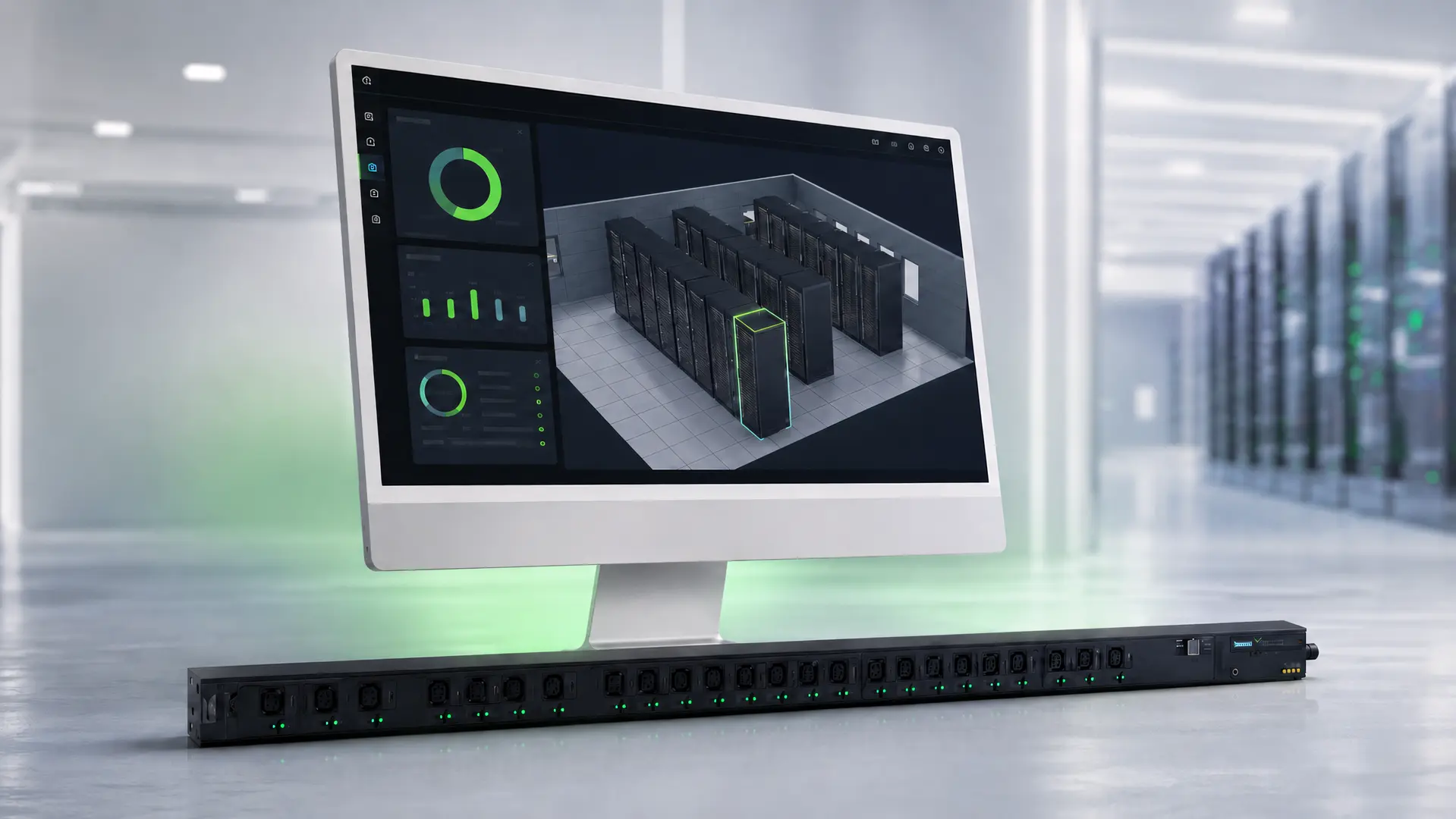
Monitor exibindo dashboard da integração entre DCIM e Rack PDU Inteligente para monitoramento da infraestrutura crítica, energia e ativos em data center.

A Smart Rack PDU measures electrical performance at the point closest to the load: the rack.

DCIM connects this data to assets, capacity, environmental conditions, historical data and planning.

Together, they answer the questions that disconnected systems and spreadsheets cannot:

  • Where electrical risks exist
  • Where available headroom actually exists
  • Which racks are closest to their capacity limits
  • How loads are distributed across phases and circuits
  • Where there is capacity to expand with confidence

What Is DCIM and Smart Rack PDU Integration?

They are two complementary layers of data center physical infrastructure management.
The Smart Rack PDU is the power distribution unit installed in the rack. It measures electrical behavior at the point closest to the load, including power consumption, current, load by phase and circuit, and, depending on the model, at the outlet level.
DCIM brings power, assets, capacity, environmental conditions, historical data, and planning together in a unified view of data center operations.

A Smart Rack PDU measures electrical behavior at the rack level. DCIM puts that data into operational context.
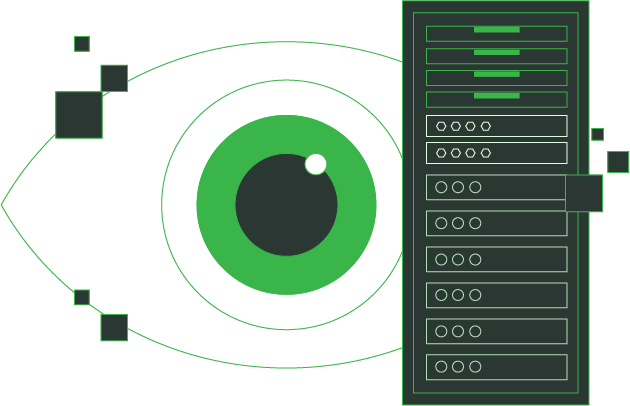
Ilustração da integração entre DCIM e Rack PDU Inteligente representando a visibilidade da infraestrutura crítica, monitoramento de energia e análise operacional em data center.
Together, they enable teams to move beyond isolated measurements and understand what the data means for risk, capacity and future growth.

Why Disconnected Data Create Operational Blind Spots

A data center can have access to vast amounts of data and still operate with limited visibility when information is scattered across power systems, dashboards, local alarms, capacity spreadsheets, asset inventories and manual reports.
When data is scattered across multiple sources, teams waste valuable time consolidating it before they can make decisions. They know the facility’s total power consumption but struggle to answer practical questions:

Which rack is closest to its capacity limit?

Where is available headroom?

Is the load properly balanced across phases and circuits?

Are there localized overload risks?

Is the available data sufficient to plan future expansion?

Operational maturity is not about collecting more data. It is about connecting data to the right context. Without context, technical information remains just another measurement. With context, it becomes actionable insight.

Energy Monitoring Is Different from Data Center Capacity Management

Energy monitoring shows how much power the infrastructure consumes. Capacity management goes further. It reveals where the load is concentrated, how much headroom remains, which racks are approaching their limits, and what actions should be taken before risk escalates.
A rack may consume more power than expected, a phase may become more heavily loaded, or a circuit may begin to lose available capacity. Without context, these signals remain isolated. With a connected view of the infrastructure, they provide actionable insights into capacity, operational priorities and business continuity.

The Four Pillars Strengthened by the Integration

The combination of rack-level measurement and operational context strengthens the data center across four key dimensions:

Pillar

Operational Challenge

What Changes

Aggregate monitoring does not reveal load behavior within individual racks.

Operations gain visibility into power consumption, load, phases, circuits and capacity limits at the exact point where the load resides.

Installed capacity is often mistaken for available capacity.

Teams measure actual headroom by rack, phase and circuit before planning new workloads or expansion.

Electrical anomalies often go unnoticed until an incident occurs.

Granular visibility reveals load imbalance, saturation and diminishing headroom before overload occurs.

Spreadsheets, manual validation and fragmented data consume valuable technical time.

Data becomes integrated, traceable and ready to support decision-making, as well as energy consumption reporting and analysis.

Operational Challenge

Aggregate monitoring does not reveal load behavior within individual racks.

What Changes

Operations gain visibility into power consumption, load, phases, circuits and capacity limits at the exact point where the load resides.

Operational Challenge

Installed capacity is often mistaken for available capacity.

What Changes

Teams measure actual headroom by rack, phase and circuit before planning new workloads or expansion.

Operational Challenge

Desvios elétricos são percebidos tarde às vezes só no incidente.

What Changes

Granular visibility reveals load imbalance, saturation and diminishing headroom before overload occurs.

Operational Challenge

Spreadsheets, manual validation and fragmented data consume valuable technical time.

What Changes

Os dados ficam integrados, rastreáveis e prontos para decisão e para relatórios de consumo e energia.

The value lies not in monitoring energy, but in turning electrical data into the foundation for better decisions about risk, capacity, operational priorities, efficiency and growth.

1.

Visibility: Clarity into Rack Level Operations

1. Visibilidade:
clareza sobre o que acontece no rack

Aggregate monitoring provides a view of the data center as a whole, but it does not always reveal where risk begins. Overall power consumption may appear to be within expected levels while individual racks, phases or circuits are already approaching their limits, as workloads are rarely distributed evenly.
Rack level monitoring captures power consumption, load, phases, circuits and electrical events at the point closest to the IT equipment and, depending on the model, even at the outlet level. Within DCIM, this information goes beyond isolated measurements to form a comprehensive view of the infrastructure.

2.

Predictability: Precise Capacity Planning

2. Previsibilidade:
precisão para planejar capacidade

Infrastructure begins to reveal previously invisible patterns. Log and performance indicator analysis enables faster fault identification. Asset management becomes more organized but still requires human expertise to interpret the data.
In many data centers, a perceived lack of capacity does not mean the infrastructure is insufficient. It reflects a lack of visibility into how capacity is distributed. By correlating rack-level data with assets, occupancy, and historical trends in DCIM, capacity planning moves beyond averages and estimates and begins to reflect the infrastructure’s actual operating behavior.
In practice, operations can plan expansions more accurately, redistribute loads based on real capacity data, and make better use of existing infrastructure by reclaiming some of that stranded power.

3.

Foresight: Taking Action Before an Incident Occurs

3. Antecipação:
agir antes do incidente

Overloads rarely happen without warning. The risk begins earlier, at specific points: a rack draws more power than expected, one phase carries a disproportionate load, a circuit runs out of headroom, or new loads are added without sufficient visibility. Small deviations accumulate, leaving little time to respond.
Granular monitoring reveals high phase loads, rising circuit consumption, shrinking capacity margins, abnormal variations, and emerging saturation trends. Correlated with DCIM’s operational context, this data enables teams to prioritize interventions and redistribute loads with confidence before a deviation escalates into an incident.
In mission-critical operations, foresight is not just about responding quickly. It means taking action before disruption occurs. Power remains the leading cause of outages, and the cost of a significant outage often exceeds $100,000.

4.

Efficiency: Less Friction and Report-Ready Data

4. Eficiência: menos atrito e dados prontos para relatório

Spreadsheets and manual controls can support operations, but they should not drive critical decisions. When power consumption, capacity, and risk depend on manual data consolidation, information becomes outdated, conflicting versions emerge, and teams face rework, limited traceability, and reliance on key individuals. The true cost is reflected in the quality of decision-making.
Rack-level data collection reduces reliance on manual readings, while DCIM eliminates fragmentation across systems, asset records, and alarms. The value goes beyond automating a task: it shortens the path from data to analysis and decision-making.

Another benefit is becoming increasingly important: energy reporting. Structured metering makes consumption traceable by customer, cage, room, area, or cost center—providing the foundation for fair cost allocation, efficiency targets, and growing energy and emissions reporting requirements.

DCIM and Smart Rack PDUs vs. Standalone Monitoring

Monitoring power matters. But monitoring power is not the same as turning electrical data into actionable decisions.

Standalone Power Monitoring

DCIM and Smart Rack PDU

Presents power data in isolation.

Connects power data to operational context.

Measures consumption.

Interprets consumption, capacity, and risk.

Provides equipment-level
visibility only.

Provides visibility across racks, assets, environmental conditions, capacity, and historical trends.

Generates isolated alerts.

Connects alerts to their potential operational impact.

Requires manual validation.

Centralizes data and reduces fragmentation.

Makes expansion planning more difficult.

Enables predictable capacity planning.

Provides numbers.

Supports informed decisions.

Contexto dos dados

Monitoramento elétrico isolado:

Presents power data in isolation.

DCIM e Rack PDU Inteligente:

Connects power data to operational context.

Monitoramento elétrico isolado:

Measures consumption.

DCIM e Rack PDU Inteligente:

Interprets consumption, capacity, and risk.

Monitoramento elétrico isolado:

Provides equipment-level
visibility only.

DCIM e Rack PDU Inteligente:

Provides visibility across racks, assets, environmental conditions, capacity, and historical trends.

Monitoramento elétrico isolado:

Generates isolated alerts.

DCIM e Rack PDU Inteligente:

Connects alerts to their potential operational impact.

Monitoramento elétrico isolado:

Requires manual validation.

DCIM e Rack PDU Inteligente:

Centralizes data and reduces fragmentation.

Monitoramento elétrico isolado:

Makes expansion planning more difficult.

DCIM e Rack PDU Inteligente:

Enables predictable capacity planning.

Monitoramento elétrico isolado:

Provides numbers.

DCIM e Rack PDU Inteligente:

Supports informed decisions.

Monitoramento elétrico isolado:

Presents power data in isolation.

DCIM e Rack PDU Inteligente:

Connects power data to operational context.

Monitoramento elétrico isolado:

Measures consumption.

DCIM e Rack PDU Inteligente:

Interprets consumption, capacity, and risk.

Monitoramento elétrico isolado:

Provides equipment-level
visibility only.

DCIM e Rack PDU Inteligente:

Provides visibility across racks, assets, environmental conditions, capacity, and historical trends.

Monitoramento elétrico isolado:

Generates isolated alerts.

DCIM e Rack PDU Inteligente:

Connects alerts to their potential operational impact.

Monitoramento elétrico isolado:

Requires manual validation.

DCIM e Rack PDU Inteligente:

Centralizes data and reduces fragmentation.

Monitoramento elétrico isolado:

Makes expansion planning more difficult.

DCIM e Rack PDU Inteligente:

Enables predictable capacity planning.

Monitoramento elétrico isolado:

Provides numbers.

DCIM e Rack PDU Inteligente:

Supports informed decisions.

When DCIM and Smart Rack PDU Integration Is the Right Choice

When operations need to make more precise decisions about power consumption, capacity, risk, and expansion than aggregate data can support. Common indicators include:
Frequent load growth and higher-density racks
Numerous racks, phases, and circuits to monitor
Capacity management
Reliance on spreadsheets
Risk of localized overloads
Need to allocate costs by customer, area, rack, cage, room, or cost center
Multiple disconnected monitoring systems
Need to justify expansion with data
Limited visibility into actual capacity headroom before adding new loads

How to Choose the Right Solution for Your Data Center’s Needs?

Rather than comparing isolated features, assess whether the DCIM and Smart Rack PDU solution delivers visibility, operational context, and decision-making capabilities. Key criteria include:

Compatibility between Smart Rack PDUs and the DCIM platform;

Reporting by customer, area, rack, cage, or cost center;

Required metering granularity: rack, phase, circuit, or outlet level;

Scalability to support future expansion;

Metering accuracy and integration with existing systems;

Access security and ease of management;

Continuous monitoring, configurable alerts, and historical consumption data;

Technical support and proven mission-critical infrastructure expertise.

The value lies not in the PDU or DCIM alone, but in the integration of granular metering with operational context.

Is Your Operation Ready to Evolve?

Before evaluating tools, determine whether your current monitoring system can answer management’s critical questions:

Power consumption is monitored only in aggregate;

Available capacity depends on spreadsheets or estimates;

The team manually verifies information at the rack;

Power data is not connected to assets;

There is no clear visibility into loads by phase, circuit, or rack;

Expansion planning lacks predictability;

Energy cost allocation relies on estimates;

Localized risks are identified too late;

Operational reporting consumes too much of the team’s time.

If answering critical questions depends on manual verification, individual knowledge, or spreadsheets, there is a clear opportunity to improve.

FAQ

To gain clear visibility into power consumption, capacity, risk, and efficiency. Smart Rack PDUs provide rack-level data, while DCIM puts that data into operational context. green4T assesses the existing infrastructure, identifies visibility gaps, and connects power data to data center management.

A Smart Rack PDU measures rack-level power data. DCIM connects that data to assets, capacity, environmental conditions, historical trends, and planning. green4T structures this integration, enabling operations to move beyond isolated measurements and make decisions based on contextualized data.

Because standalone metering provides numbers; integrated with DCIM, it reveals impact, available headroom, risk, and priority. green4T connects power consumption, load, capacity, and asset data to the operational context needed to make informed decisions about expansion, load redistribution, and efficiency.

Power monitoring tracks consumption, current, and load. Capacity management shows where headroom remains and where adding new loads could create risk. green4T supports this transition—from standalone power readings to clear visibility into available headroom, localized risks, and actual use of installed capacity.

They identify where capacity headroom remains, which racks are approaching their limits, and where loads can be redistributed before expansion becomes necessary. green4T assesses load distribution, operational history, and the areas that require adjustment or additional capacity.

A Smart Rack PDU measures power consumption, load, phases, and circuits at the rack level, while DCIM organizes this data to show where capacity is available for new loads. green4T connects rack-level power data with infrastructure context to guide equipment installation, load redistribution, or capacity expansion.

A Smart Rack PDU collects data directly at the rack level, while DCIM centralizes it, reducing the need for on-site inspections and isolated checks. green4T assesses processes that rely on spreadsheets and recommends ways to improve traceability and consistency.

They identify racks, phases, or circuits approaching their limits, enabling teams to act before an overload develops. green4T defines the metering and integration architecture so operations can work with granular data rather than averages.

Depending on the architecture and metering granularity, consumption can be attributed to a rack, customer, cage, room, area, or cost center with full traceability. green4T determines the appropriate metering level and integrates the data with DCIM to provide clear visibility into consumption, margins, and capacity utilization.

Yes. In colocation facilities, they help track power consumption, capacity, occupancy, and cost allocation by customer, rack, cage, or room. green4T supports implementation and integration to improve traceability and transparency across infrastructure usage.
Yes. They reveal where actual capacity headroom remains before adding new loads or planning an expansion. green4T assesses the infrastructure, load distribution, and the areas that require redistribution, adjustment, or additional capacity.

Yes. In high-density data centers, even small load variations can affect power headroom, cooling, and capacity distribution. Rack-level monitoring identifies points approaching their limits, while green4T guides decisions on load redistribution, expansion, or infrastructure adjustments.

It depends on the PDU model, available protocols, the DCIM platform, and the data center architecture. green4T assesses the existing infrastructure and determines how to integrate rack-level power data with DCIM.
When decisions about power consumption, margins, risk, expansion, cost allocation, or capacity utilization still depend on fragmented data, spreadsheets, or manual verification, green4T assesses the current operation and recommends the best path toward greater visibility.
From infrastructure assessment through implementation and integration, green4T works with DCIM software and Smart Rack PDUs across a range of mission-critical infrastructure—enhancing visibility, monitoring capacity, reducing manual processes, and turning power data into operational insight.

How green4T Drives This Transformation

Evolving operations requires more than adding monitoring layers. It requires understanding the existing infrastructure, identifying visibility gaps, defining the appropriate level of rack-level monitoring, and connecting electrical data to operational context. This is where green4T delivers value by transforming infrastructure data into operational routines and informed decision-making. This approach includes:

Assessment

of existing infrastructure, operational needs, and visibility gaps.

Design

of the appropriate metering and data management architecture.

Integration

of Smart Rack PDUs, DCIM, and existing systems.

Consolidation

of power, asset, capacity, environmental, and historical data.

Monitoring

of consumption, capacity headroom, operational risks, and trends.

Evolution

of data center efficiency, visibility, and operational maturity.

Bring this evolution to your infrastructure and turn rack-level power data into more informed decisions about capacity, headroom, and risk.

Latin America’s leading provider of mission-critical infrastructure management and operations

green4T supports critical operations continuously throughout Latin America, with a technical presence, standardized processes and operational governance applied on a day-to-day basis.

+500

managed data centers

+60K

technical assistance per year

+8K

pieces of equipment under management

+9.5K

assets under DCIM monitoring

+700

specialized technicians

+70

cities with an operational presence

04

countries with a structured operational presence

26

Brazilian states and the Federal District

Next Steps

Schedule an operational blind spot assessment with a green4T specialist.