The 4 types of data center maintenance

Without data center maintenance, there is no continuity. With it, your mission-critical infrastructure becomes available and mature.

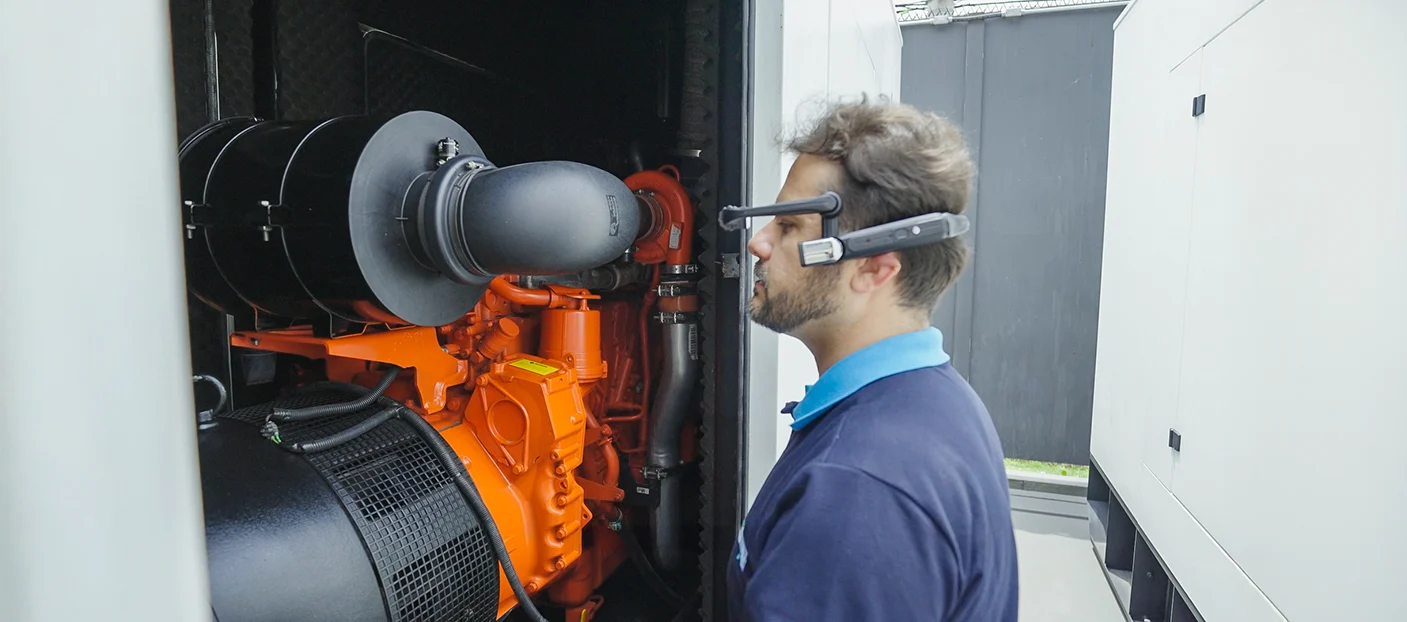
Técnico realizando manutenção de data center em equipamento crítico com monitoramento e inspeção preventiva

17 de July de 2025

Data center maintenance is an essential factor in ensuring high availability and operational resilience of critical IT infrastructure. More than a technical requirement, it is a strategic approach to reduce risks and ensure business continuity, preventing failures that can compromise the entire operation.

High frequency

55% of organizations reported at least one downtime incident in the last three years

Downtime costs
are high

54% of downtime incidents resulted in costs exceeding US$100,000

Given this scenario, the data reinforces the urgency of adopting a robust strategy to prevent downtime. As data center performance and high availability are directly linked to an effective maintenance approach, this practice plays a central role in operational resilience and continuity.

Data Center Maintenance Costs Far Less Than Downtime

In this context, data center maintenance is no longer just a repair task — it becomes a strategic component of operations. A reactive approach turns maintenance into a liability: a constant source of risk and unpredictable costs. On the other hand, an intelligent and proactive approach — data-driven, supported by structured processes, continuous monitoring and a forward-looking perspective — transforms maintenance into a competitive advantage, capable of ensuring high availability, operational resilience and the efficiency your company needs to grow with confidence.

Why Does Unplanned Downtime Cost So Much?

Because it involves a series of critical impacts, such as:

Data loss or corruption

often of invaluable importance

Loss of productivity

due to the total or partial interruption of business processes

Loss of revenue

from disrupted sales, contracts and deliveries

Lasting damage

to the company’s reputation and the trust of shareholders, partners and customers

These hidden costs — yet highly real — make it clear that investing in scheduled and predictive maintenance is always more cost-effective and safer than bearing the losses of unplanned downtime.

Let’s explore how the different types of data center maintenancepredictive, preventive, evolutionary, and corrective — directly impact your business outcomes and how an integrated approach can protect your operation.

Corrective Maintenance: The Risks of a Reactive Approach

Corrective maintenance comes into play only when something has already failed — a piece of equipment stops, a system goes offline. Although unavoidable in some situations, relying on this approach is like driving while looking only in the rearview mirror. The costs go far beyond the immediate repair:

  • Cascading impact: An isolated failure can quickly affect other areas, leading to broader and more costly disruptions.
  • Financial and reputational losses: Every minute of downtime can mean lost revenue and damage to your brand’s reputation.
  • Operational instability: Constantly reacting causes team fatigue, increases risk and shifts focus away from actions that truly generate value.

Treating corrective maintenance as the norm rather than the exception exposes your company to unnecessary risks and compromises operational stability.

Predictive Maintenance: Anticipating the Future

Corrective maintenance is a type of data center maintenance that comes into play only after something has already failed — when equipment stops working or a system goes offline. While unavoidable in some situations, relying on this approach is like driving while only looking in the rearview mirror. The costs go far beyond the immediate repair:

Imagine detecting a slight increase in motor vibration days before it fails, enabling a planned intervention without disrupting your business. This is intelligence applied to data center maintenance. Predictive maintenance not only prevents unexpected downtime and its associated costs, but also optimizes resource usage, directing team efforts where they are truly needed and maximizing the lifespan of your assets.

It marks the shift from reactive maintenance to a proactive and efficient management of your company’s critical infrastructure.

Preventive Maintenance: The Foundation of Stability

Preventive maintenance is based on schedules (usage time, cycles), including inspections, testing and planned replacements to keep systems operating as expected. Think of periodic checks on electrical systems, cooling and other critical components.

Although essential to establish a basic level of control and avoid obvious failures, the preventive approach has its limitations. It operates based on averages and estimates, not on the actual condition of each asset. A component may fail shortly after an inspection. Therefore, preventive maintenance is an important step, but not sufficient to ensure maximum availability.

The Role of the NOC and 24/7 Monitoring in Data Center Maintenance

In addition to the different types of data center maintenance, one of the key pillars for ensuring high availability and security across data center infrastructure is the Network Operations Center (NOC), combined with advanced 24/7 monitoring systems. The NOC acts as the “command center” of data center operations, where specialized teams monitor all equipment, systems, and critical connections in real time.

Through sensors, software tools and integrated platforms, monitoring systems capture real-time data on temperature, humidity, energy consumption and more. This data enables the identification of any anomaly or deviation from normal parameters before they turn into downtime events. Here, “before” is the key word.

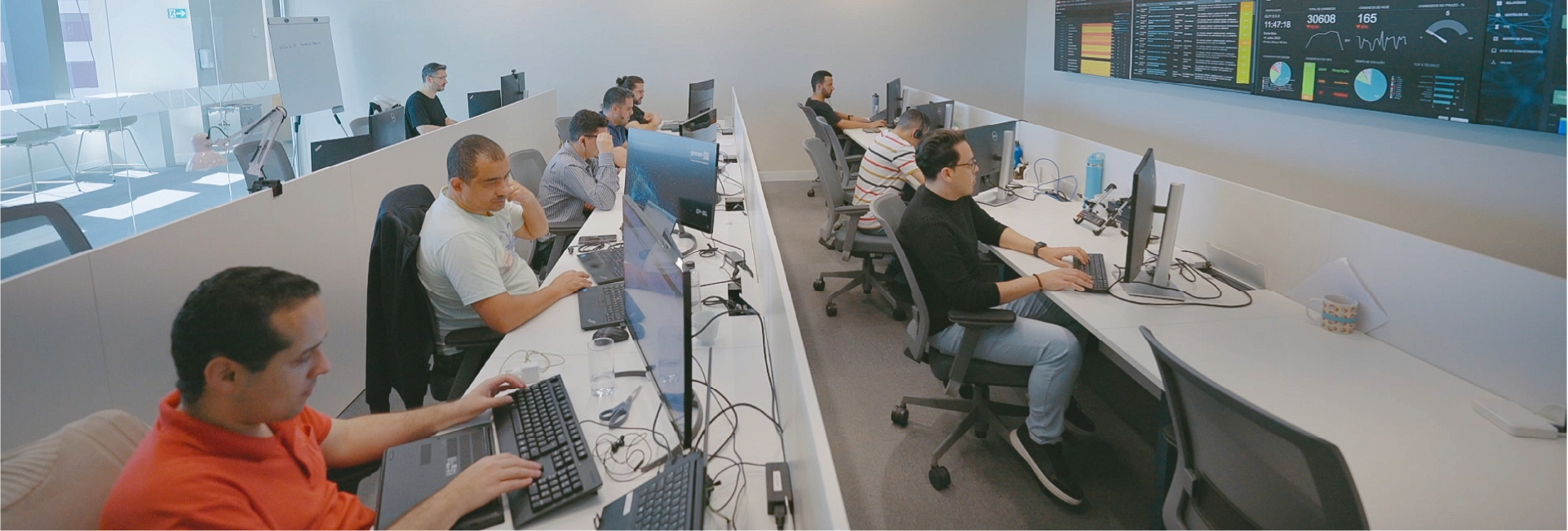
Equipe NOC realizando monitoramento 24x7 para manutenção de data center com análise de alertas e prevenção de falhas

With 24×7 monitoring, the NOC can respond quickly to alerts, perform detailed analysis to identify root causes and trigger preventive or corrective interventions in a planned manner, drastically reducing the risk of downtime.

24×7 monitoring and automated response are gaining prominence

Automation and AI tools are increasingly being adopted for risk prevention and mitigation

Organizations with real-time monitoring and effective DCIM can detect failures early, reducing their impact.

The NOC aggregates information from multiple sources and systems, enabling a holistic and integrated view of data center operations. This facilitates action prioritization, optimization of technical and human resources, and alignment of maintenance activities with the real needs of the infrastructure.

In addition, the NOC acts as a single point of control and communication for incidents, ensuring fast, coordinated and documented responses that minimize the impact of events.

The NOC is essential for the effectiveness of predictive maintenance, as it supports the analysis of historical and real-time data used to anticipate imminent failures. It also supports evolutionary maintenance, providing valuable insights to plan technology upgrades, modernization and expansions based on usage and performance trends.

Among the direct benefits of the NOC and real-time monitoring are:

  • Significant reduction in incident response time;
  • Reduced risk of unexpected failures;
  • Improved planning and execution of maintenance;
  • Increased availability, security and reliability of the data center;

Procedures, documentation and change management

4 out of 5 professionals said their most recent failure could have been avoided with better management, processes and configuration.

Another essential aspect of data center maintenance is process standardization. Operating manuals, contingency plans, emergency procedures and change management must be documented, tested and kept up to date. The absence of these practices can turn a simple failure into a widespread collapse.

Human Error Remains a Critical Factor

Human errors contribute, directly or indirectly, to between two-thirds and four-fifths of all downtime incidents.

This data reinforces the importance of standardized processes, continuous training and rigorous change management. Every intervention must follow a formal procedure of impact assessment, detailed planning, controlled execution and careful validation. This approach minimizes risks, preventing maintenance activities from interfering with production systems or creating unexpected vulnerabilities.

Looking Ahead: Evolutionary Maintenance

Beyond preventing and anticipating failures, strategic data center management focuses on the future and the maturity of operations. Evolutionary maintenance is a type of data center maintenance focused on modernizing infrastructure, ensuring it not only operates reliably, but also keeps pace with new market demands, regulatory requirements, and optimization opportunities.

This may involve replacing outdated equipment with more efficient technologies that reduce energy consumption (and costs), adapting physical space to support higher equipment density, or upgrading management systems to provide deeper operational insights.

Evolutionary data center maintenance ensures that the mission-critical environment does not become obsolete, keeping your business competitive, meeting sustainability criteria (ESG), and ensuring compliance with new standards. It is the investment that keeps your infrastructure aligned with the company’s growth strategy.

Comparison of Data Center Maintenance Types

Type

Timing

Relative Cost

Operational Risk

Predictive

Condition-based and proactive

Moderate

Low

Preventive

Scheduled periodically

Medium

Low to Medium

Evolutionary

Planned based on modernization needs

High

Variable

Corrective

After failure

High

High

Type: Predictive

Timing: Anticipated based on condition

Relative cost: Moderate

Operational risk: Low

Type: Preventive

Timing: Scheduled periodically

Relative cost: Medium

Operational risk: Low to medium

Type: Evolutionary

Timing: Planned due to modernization needs

Relative cost: High

Operational risk: Variable

Type: Corrective

Timing: After failure

Relative cost: High

Operational risk: High

The green4T Approach: Operational Intelligence for Superior Results

Understanding that the availability of your data center is synonymous with business continuity, green4T adopts an operations and maintenance model that places data intelligence at the center of the strategy. Our Ongoing service does not merely react to problems; it creates a virtuous cycle of continuous improvement.

We integrate continuous oversight carried out by specialized teams, certified field engineering and a technology platform – Online – that provides full real-time visibility of operations. We manage your assets in detail, building a history that enables optimization of performance and the lifespan of each component.

The results for your company are tangible: a drastic reduction in critical failures that could disrupt your operations, real efficiency gains reflected in costs, and budget predictability that eliminates unpleasant surprises. We transform maintenance from a reactive cost center into a driver of efficiency and reliability.

By integrating the different types of data center maintenance — predictive, preventive, evolutionary, and corrective as an occasional and residual approach — supported by data analysis and technical expertise, organizations can transform the management and operation of mission-critical environments.


Increase Your Data Center Availability

Are you ready to transform your data center maintenance into a competitive advantage? Talk to green4T specialists and discover how our Ongoing service for intelligent operations and maintenance can bring more security, efficiency and predictability to your business.

Gráfico de crescimento representando evolução da manutenção de data center e aumento da maturidade operacional

Leader in the management and operation of mission-critical environments in Latin America

green4T supports critical operations continuously throughout Latin America, with a technical presence, standardized processes and operational governance applied on a day-to-day basis.

+500

managed data centers

+35K

technical assistance per year

+8K

pieces of equipment under management

+9.5K

assets under DCIM monitoring

+700

specialized technicians

+70

cities with an operational presence

04

countries with a structured operational presence

26

Brazilian states and the Federal District